Japan has long rewarded travelers who seek it out throughits cuisine—but for those who have already explored its celebrated restaurantsand familiar dishes, a quieter, more meaningful layer awaits. It is found notonly in what is served, but in how it is shared, prepared, and understood.
This summer, byFood invites travelers to move beyond simply dining well and into something far more immersive: the opportunity to experience food as locals do—and, in many cases, to create it together.
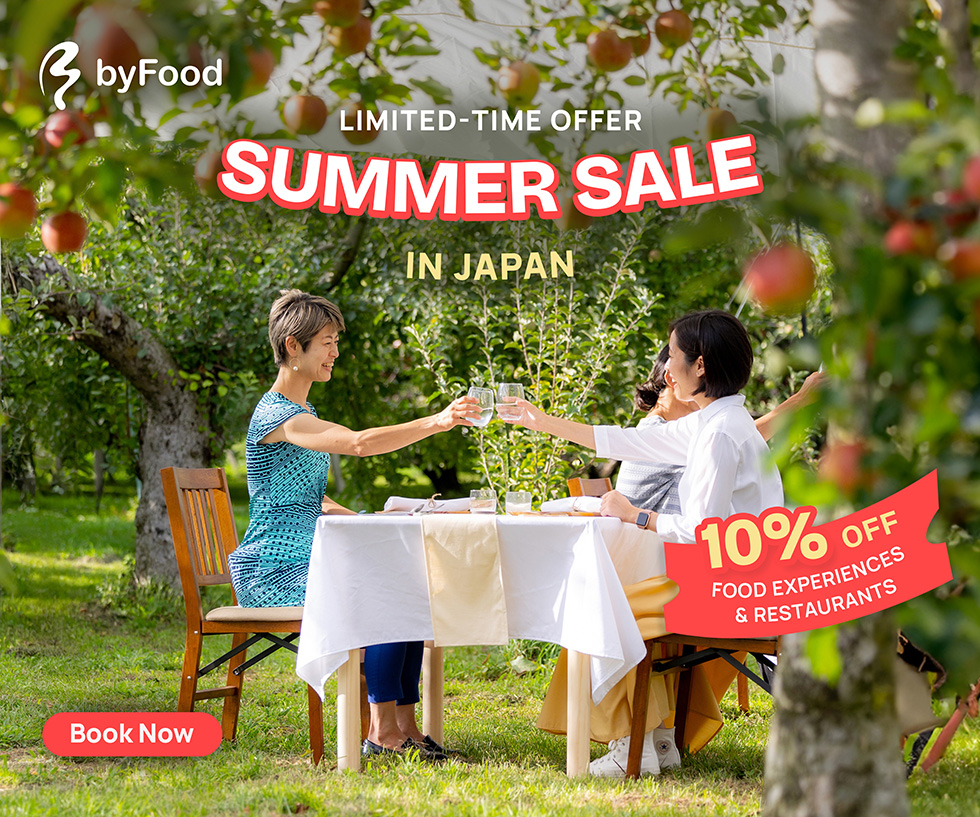
From July 1 to August 31, 2026, guests can enjoy 10% off curated culinary experiences! More than a seasonal promotion, it is an opening to engage with Japan through one of its most intimate cultural expressions.
A Simple Invitation: Eat Like a Local—But Not Only That
Japan’s most memorable meals are rarely the most formal or the most photographed. They are often found in smaller spaces—neighborhood kitchens, modest counters, and community settings where food is not staged, but lived.
Through byFood’s experiences, travelers step into these environments not as distant observers, but as welcomed participants. You mightfind yourself seated beside regulars in a tucked-away eatery, tasting dishesshaped by local seasonality and personal history.
But what distinguishes these experiences is that they often extend beyond the table. Here, the invitation is not only to taste—but to takepart.
The Shift from Dining to Creating
In Japan, the act of preparing food carries its own quiet discipline. Techniques are refined over years, gestures are deliberate, and even simple dishes reflect a deep respect for ingredients and process.
Participating in a cooking experience reveals these subtleties in ways that dining alone cannot.
Consider shaping sushi under the guidance of a neighborhood chef, where the focus begins not with fish, but with rice—its texture,temperature, and seasoning. Or learning to prepare seasonal sweets whosedesigns echo fleeting moments in nature. In Osaka, even something as playful asmaking takoyaki becomes a shared, convivial ritual.
In these settings, interaction replaces observation.Language becomes secondary to the shared rhythm of preparing, adjusting,tasting, and refining together.
It is here that travel becomes less about consumption andmore about connection.
Seasonal Texture: Why Summer Matters
To understand summer in Japan is to understand adaptation.The season’s heat has shaped an entire culinary response—one that emphasizes lightness, balance, and refreshment.
Cooling noodles, delicately flavored broths, and subtly sweet confections all reflect a sensitivity to climate. Markets shift, menusevolve, and even presentation changes to evoke a sense of calm and relief.
Experiencing these traditions first hand—whether in a kitchen or alongside a host—offers insight into how deeply cuisine is tied to environment. Summer is not simply endured; it is interpreted through food.
A Range of Experiences, Thoughtfully Curated
byFood’s strength lies in the diversity and intimacy of its offerings. Rather than standardized tours, these experiences often feelpersonal and situational:
・Cooking classes in local homes or small studios, where recipes are shared along side stories
・ Neighborhood dining experiences that prioritize interaction over formality
・Market visits and ingredient-focused sessions that trace dishes back to their origins
Across destinations such as Tokyo, Kyoto, Osaka, and beyond,each experience reveals a different aspect of Japan’s culinary landscape—onethat feels grounded in place rather than designed for spectacle.
Why This Approach Resonates Now
For seasoned travelers, the shift toward participatory, locally rooted experiences has become increasingly meaningful.
Travelers are seeking depth over breadth. They value smaller group interactions, direct engagement with communities, and experiences that leave a lasting imprint rather than a fleeting impression.
Food, in this context, becomes one of the most effective entry points. It is immediate, sensory, and inherently social. And when combined with the act of creating, it becomes something even more enduring.
Making the Most of the Summer 2026 Offer
The SUMMER2026 promotion offers a timely opportunity to explore these experiences with added flexibility. Rather than focusing on quantity, a more considered approach enhances the journey:
・Begin with a local dining experience to observe flavors and atmosphere
・Follow with a hands-on session that deepens understanding
・Choose a seasonal or regional experience that anchors the trip in place and time
Each step builds on the last, transforming individual bookings into a cohesive narrative of discovery.
To travel through Japan solely as a diner is to glimpse only part of its culinary story. The fuller experience emerges when one steps into the act of creation—when techniques are practiced, traditions are shared, and meals become collaborative rather than consumptive.
This summer, byFood offers more than access. It offers participation.
And in doing so, it reframes what it means to truly experience Japan: not just by tasting its cuisine, but by becoming, even briefly, part of the culture that sustains it.
Takeaways
For travelers looking to deepen their connection with Japan,these experiences offer a meaningful shift in perspective:
・Combine dining with hands-on cooking to fully understandJapanese cuisine
・Seek out small, local settings where interaction shapes the experience
・Embrace seasonal context, especially during Japan’s summer months
Explore premium experiences this summer, with 10% savings already included.
FAQ
Q1. What types of experiences are included in the promotion?
Eligible bookings include cooking classes, local diningexperiences, and food-focused cultural activities listed on byFood during thecampaign period.
Q2. Is prior cooking experience required?
Not at all. Experiences are designed for a wide range ofskill levels, with guidance tailored to international guests.
Q3. Are these experiences accessible for non-Japanese speakers?
Yes. Most hosts provide English support or structuredguidance to ensure a smooth and engaging experience.