.png)
When Buddhism arrived in Japan in the 6th century, it brought more than just religious teachings—it introduced new art, architecture, philosophy, and political ideas. The Asuka and Nara periods (roughly 538–794 CE) were transformative eras that laid the foundation for Japan’s classical culture. During this time, Japan began to blend native Shinto beliefs with Buddhist thought, creating a unique spiritual landscape that still shapes the country today.

Tucked away in the forested mountains of Wakayama Prefecture, Koyasan (Mount Koya) is one of Japan’s most sacred destinations—and a favorite among international travelers seeking a deeper cultural experience.
Founded over 1,200 years ago by the monk Kūkai (Kōbō Daishi), Koyasan is the heart of Shingon Buddhism and home to over 100 temples, many of which offer overnight stays. Whether you're drawn by spiritual curiosity, historical interest, or the peaceful atmosphere, Koyasan offers a truly unforgettable journey.

When most travelers think of Kyoto, the dazzling golden brilliance of Kinkakuji (Golden Pavilion) often comes to mind. But tucked away in the serene Higashiyama district lies its quieter, more contemplative counterpart—Ginkakuji, the Silver Pavilion. Though it lacks the literal silver coating its name suggests, Ginkakuji offers something far more precious: a glimpse into the soul of Japanese aesthetics.

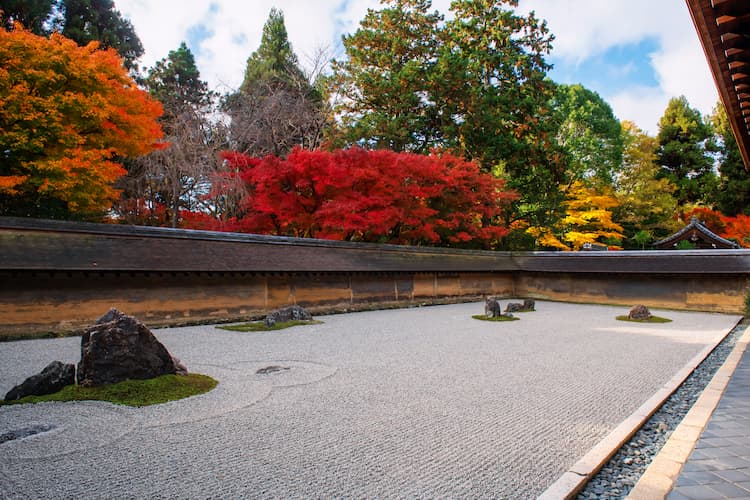
Ryoan-ji Temple in Kyoto is more than a historical site—it’s a philosophical landscape. Its world-famous Zen rock garden, composed of 15 stones on a bed of raked white gravel, has puzzled and inspired visitors for centuries. Recognized as a UNESCO World Heritage Site, Ryoan-ji invites not just sightseeing, but soul-searching.
In this article, we explore the garden’s aesthetic principles, Zen philosophy, historical evolution, mathematical mysteries, and the enduring question: Who created it—and why?